
Trip to Nara (1) Hōryū-ji
I traveled in Nara in November 2025. Nara was once the capital of Japan in the 7th century and is a true home of waka poetry. I visited Hōryū-ji Temple and also the Tatsuta River to see the autumn foliage.


Hōryū-ji Temple was built more than 1,300 years ago. Admission to the temple is 2,000 JPY, which includes entry to the museums and three other locations. It’s well worth it.
I took the photo below, capturing the brightest and most beautiful maple leaves I have ever seen.
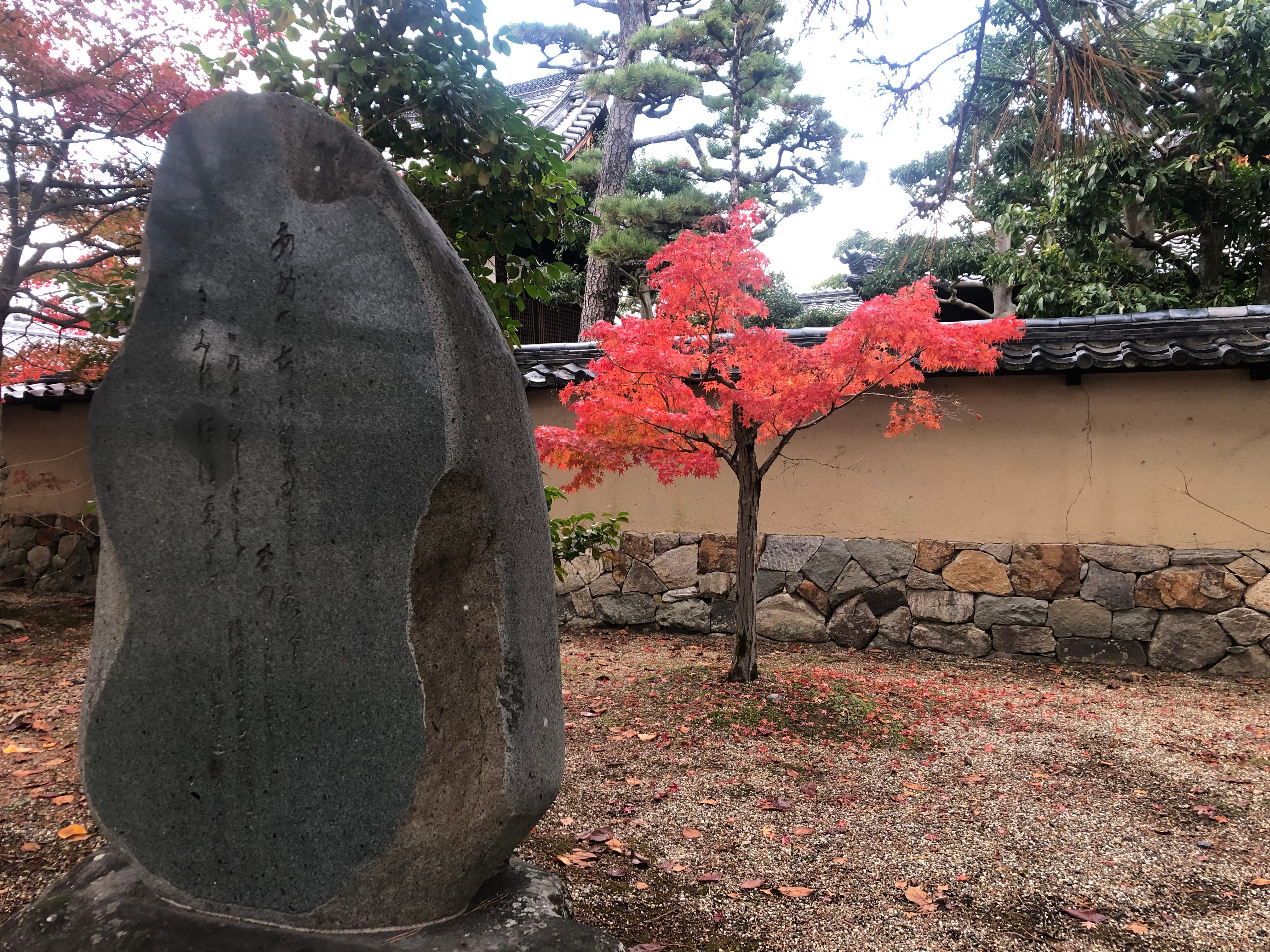
The stone monument is located near Yume-dono. A waka poem is inscribed on the stone.
It captures the atmosphere of the temple, especially Yume-dono, the octagonal hall where the compassionate Kuse Kannon has smiled down upon humanity since the 7th century.
between heaven and earth
I exist here
standing alone
this loneliness I bear
you are smiling at it
Aizu Yaichi
Original text:
あめつち に われ ひとり ゐて たつ ごとき この さびしさ を きみ は ほほゑむ 会津八一
I moved on to the Tatsuta River, a famous uta-makura, or poetic place name linked to autumn foliage.


The Tatsuta River was one of the highlights of this trip. I wanted to see the real Tatsuta River, long celebrated by Kyoto nobles as a poetic emblem of autumn.
In truth, the scene was beautiful, though not quite as the poems describe it, with red leaves flowing and covering the surface of the river. For me, this was an important realization: many poetic scenes are imagined and refined over time, handed down through generations as shared visions of beauty.
After a long walk, I returned to the inn, took a soak in the public onsen bath, enjoyed a good Japanese dinner, and then rested.


Notes: